Professional
SoFiit
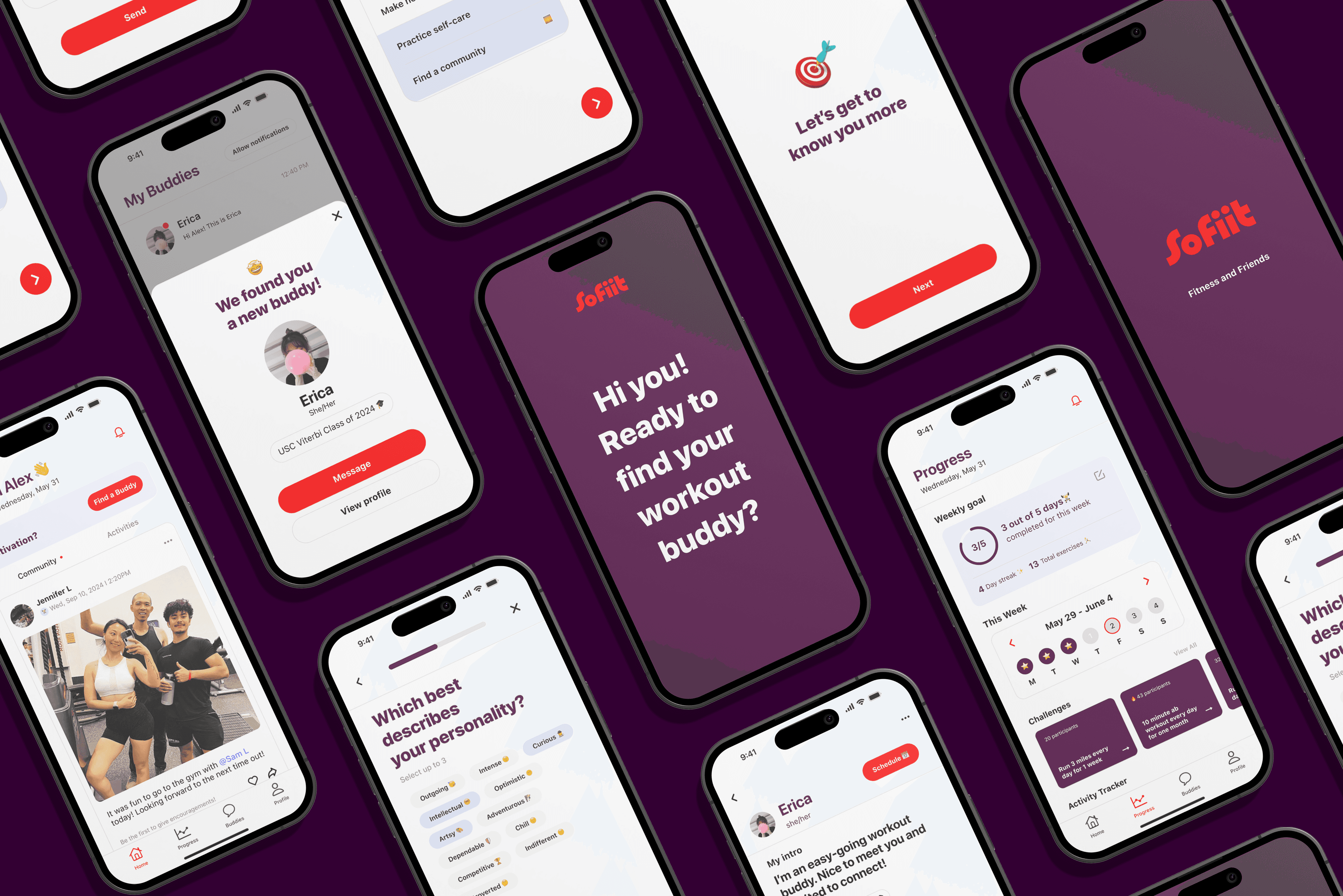
A campus social fitness platform helping students find workout partners.
Industry
B2C Social
Role
Founding Product Designer
Team
2 Founders, 3 Engineers
Time
Mar 2023 - Mar 2024 (1 Year)
Problem
Fitness in college is often a solo experience. Students want to stay active, but difficulty finding compatible workout partners makes consistency hard to sustain.
My Contribution
As the sole and founding designer, I led SoFiit’s product design from concept to launch. I ran user research, defined experience strategy, and designed the brand and interface. I partnered closely with the founding team to ship an MVP and expand the product through iteration.
Result
368+ Active users within the first month of launch
Techstars'24 Fall Class
(<1% acceptance rate)
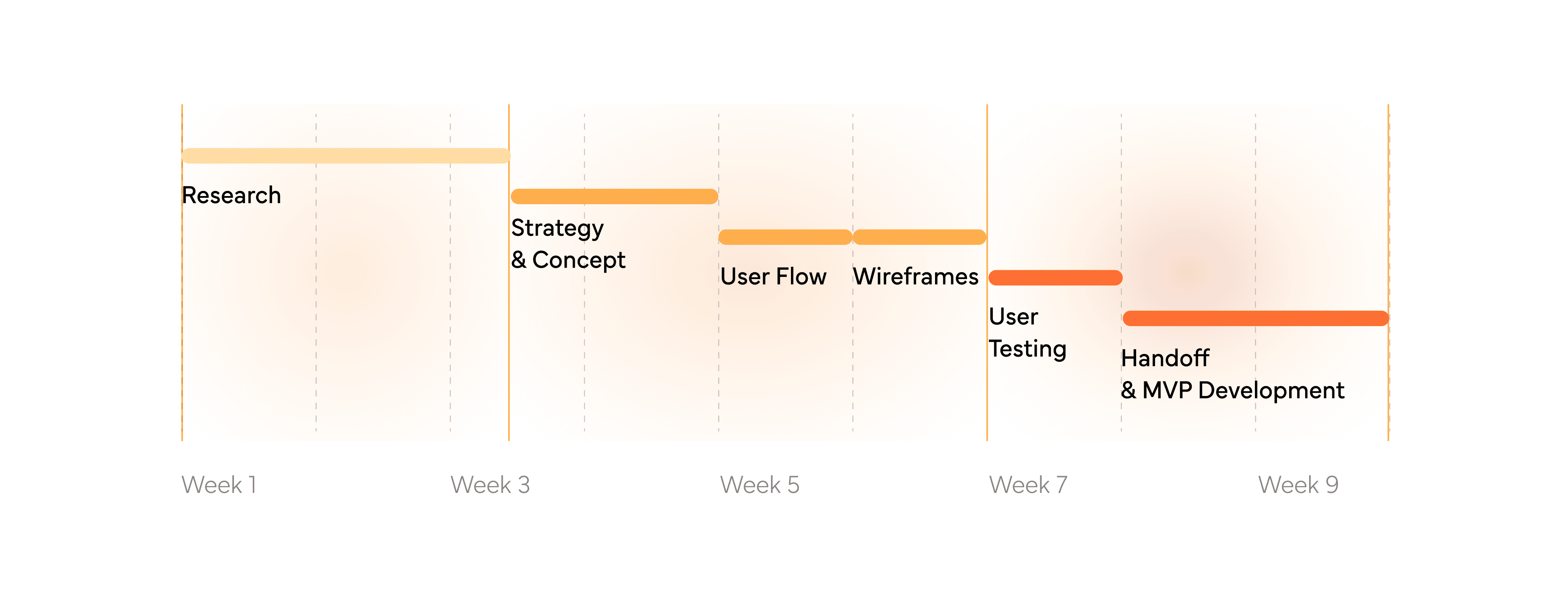
The MVP Timeline
Background
Everything started with a Google Form…
When I first joined SoFiit, the product existed as a simple Google Form where students answered questions about their fitness goals and preferences for a gym buddy.
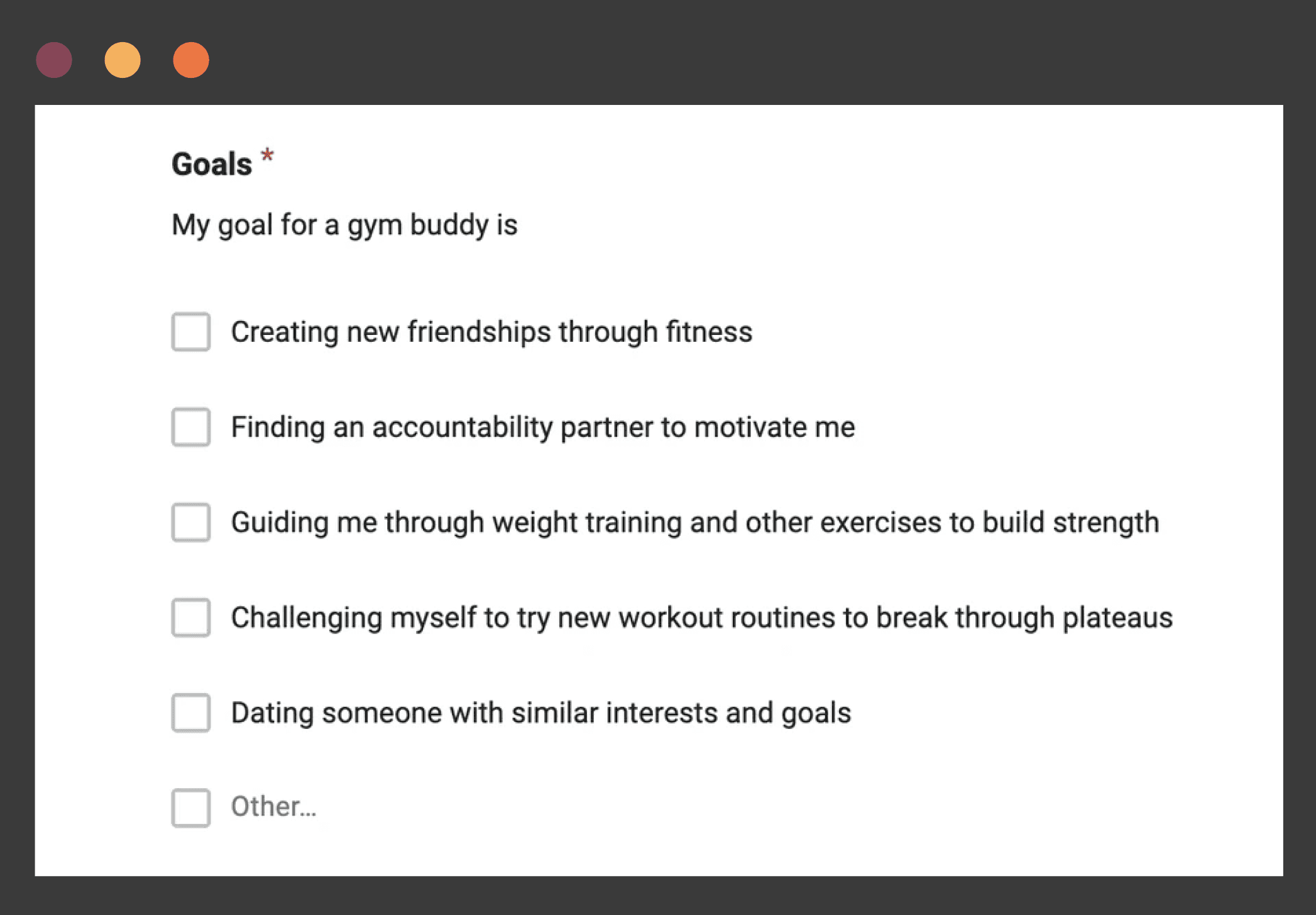
From there, we manually matched users based on AI insights!
My job was to transform this manual process into a seamless, fully digital experience.

User Research
Defining the problem through research.
To understand user motivations, pain points, and product needs, we conducted 80+ interviews with university students across fitness levels and lifestyles, supplemented by secondary research.
A few key words popped up consistently:

Who are our users?
Based on key insights gathered on student behaviors and needs, I fabricated 3 personas to better empathize with users with different motivations and to help guide our design.
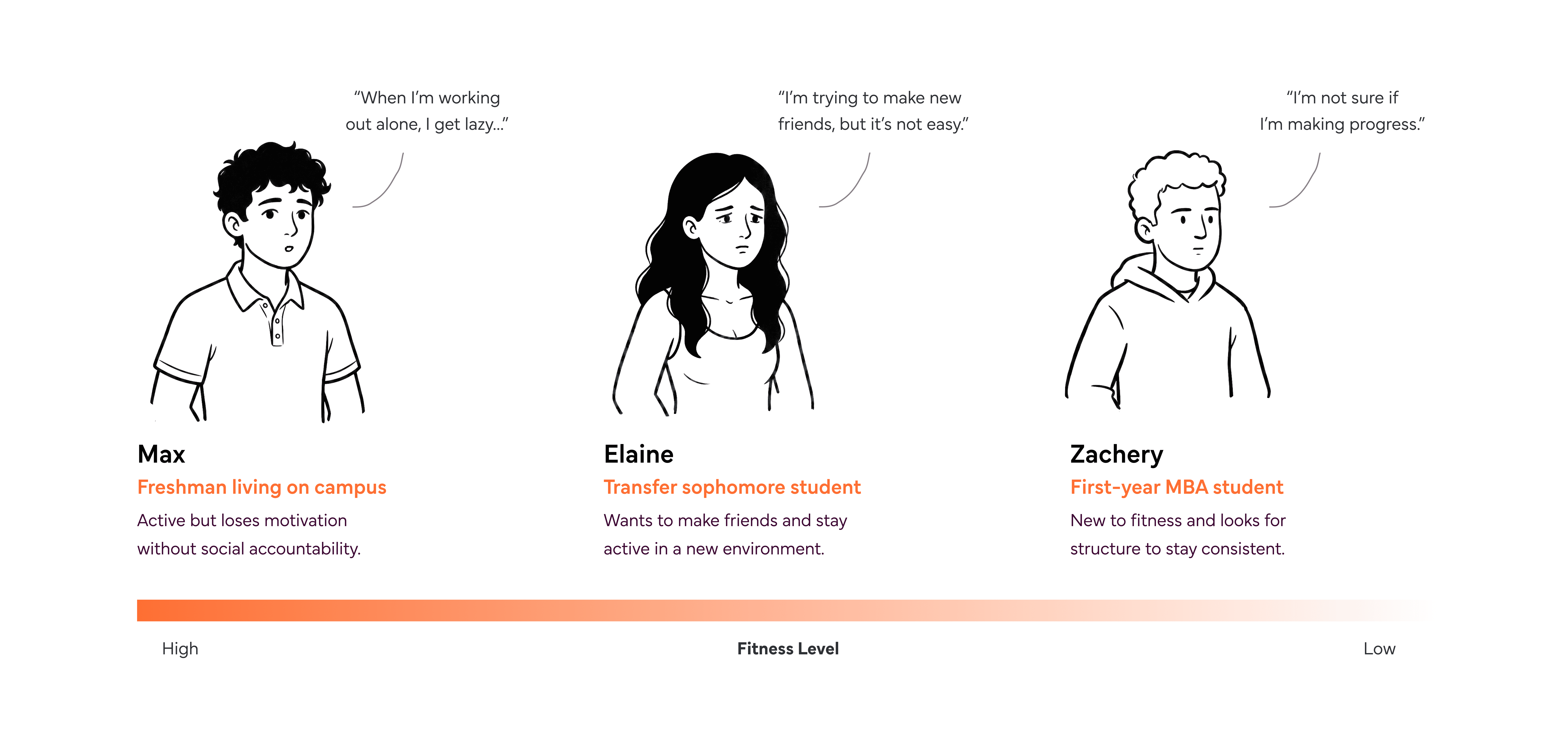
How might we build an online social fitness ecosystem that fosters personalized connections to enhance student well-being and commitment?
Design Process
Competitive Audit
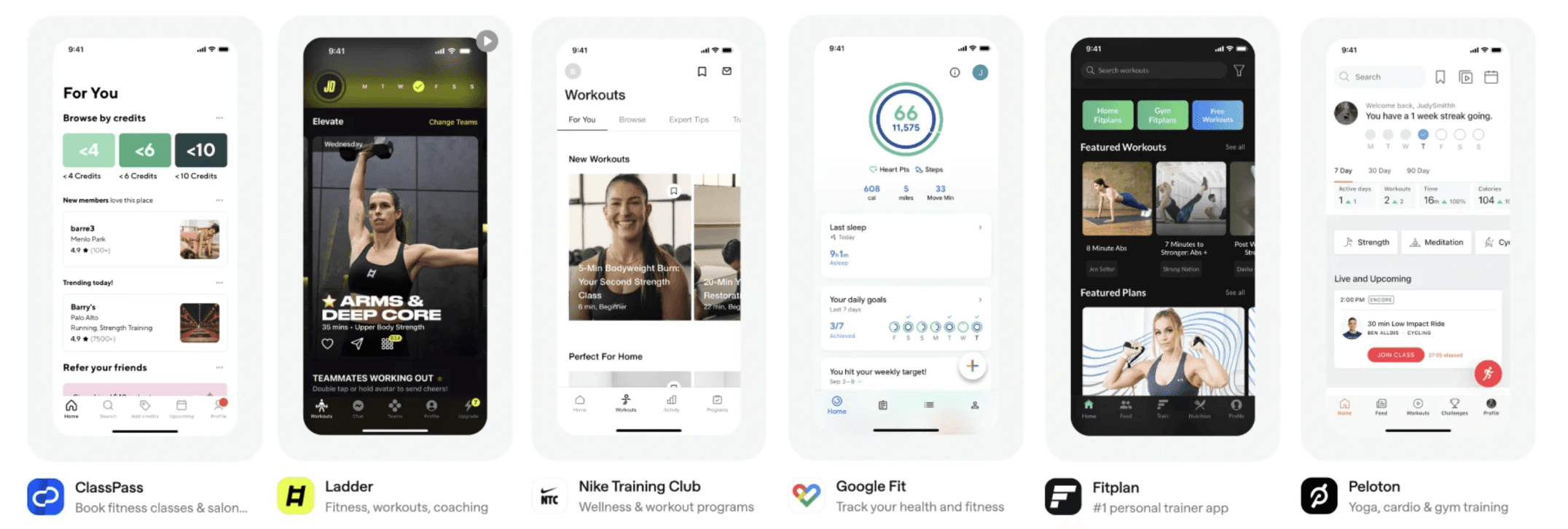
To differentiate SoFiit in the crowded fitness app market, I conducted a competitive audit of similar platforms, analyzing key features, user experiences, and engagement strategies.

Takeaways
There is a gap between individual fitness tracking tools and socially grounded wellness experiences, where SoFiit creates value by anchoring motivation and accountability within campus communities.
Design Strategy
To translate research insights into a scalable product, I applied a clear design strategy
across workflows, information architecture, and a scalable design system.
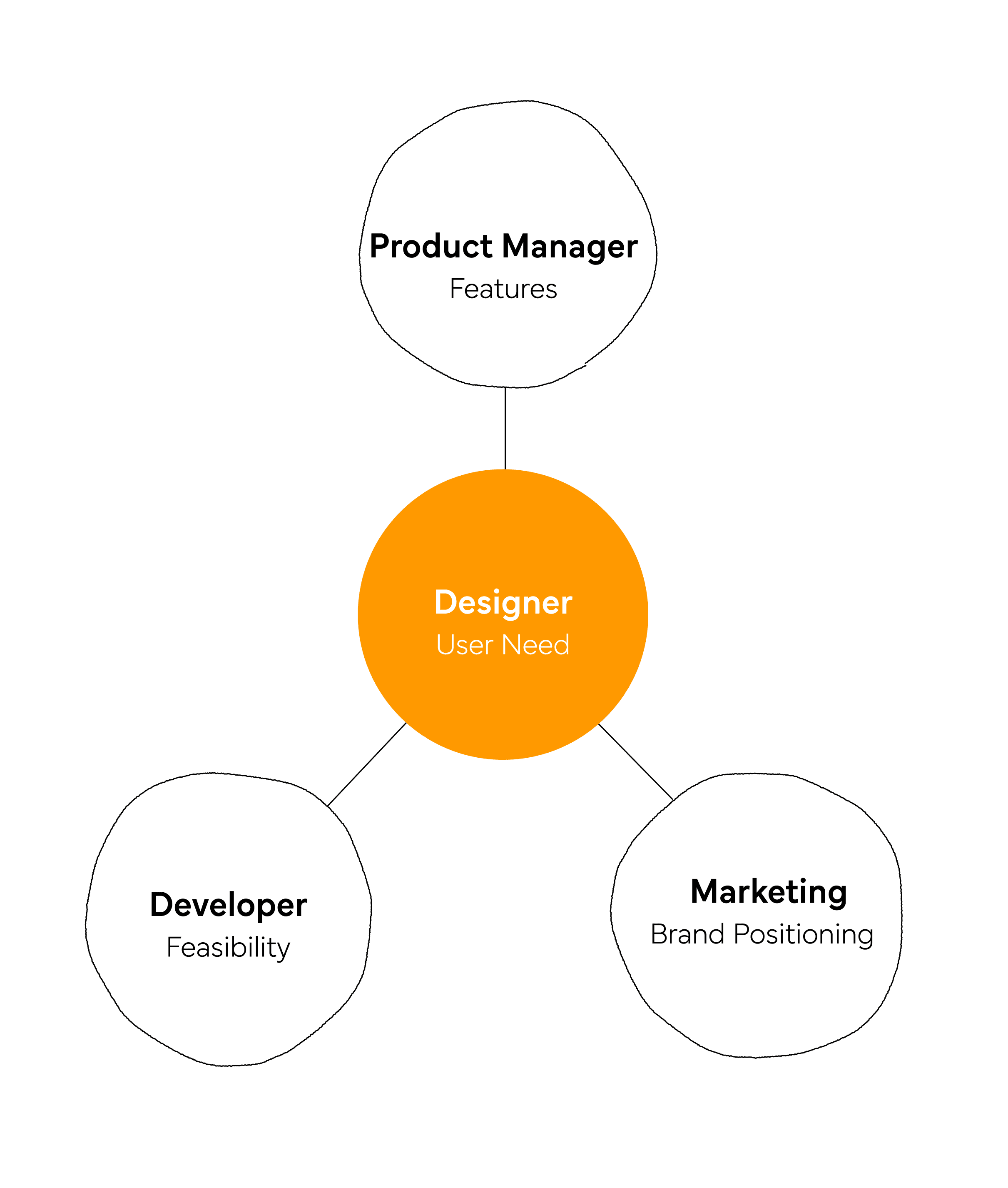
Bridging Team Roles
➔ Balance requirements to create
feasible solutions.
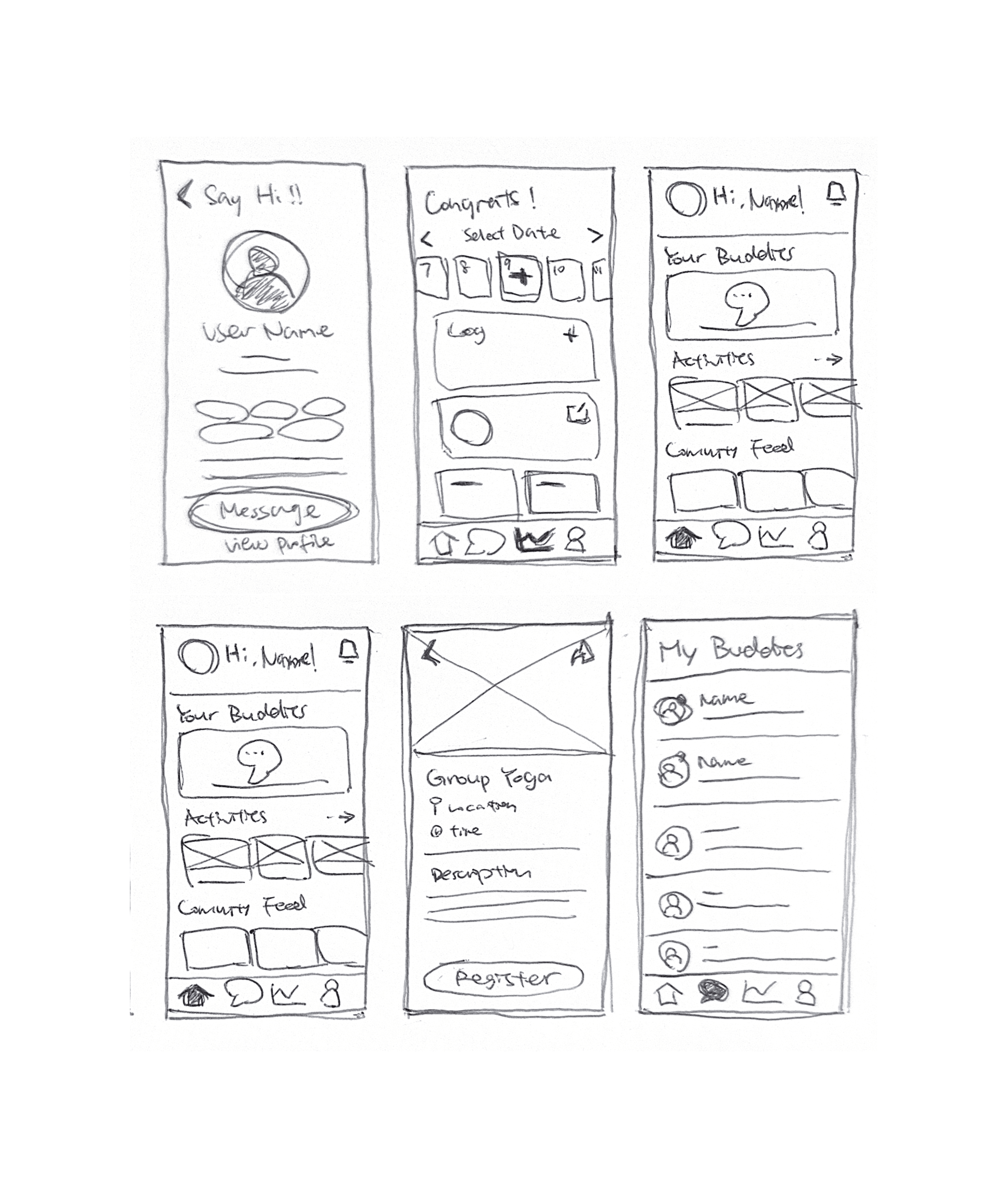
Optimizing for Efficiency
➔ Reduce complexity to ship the
MVP faster.
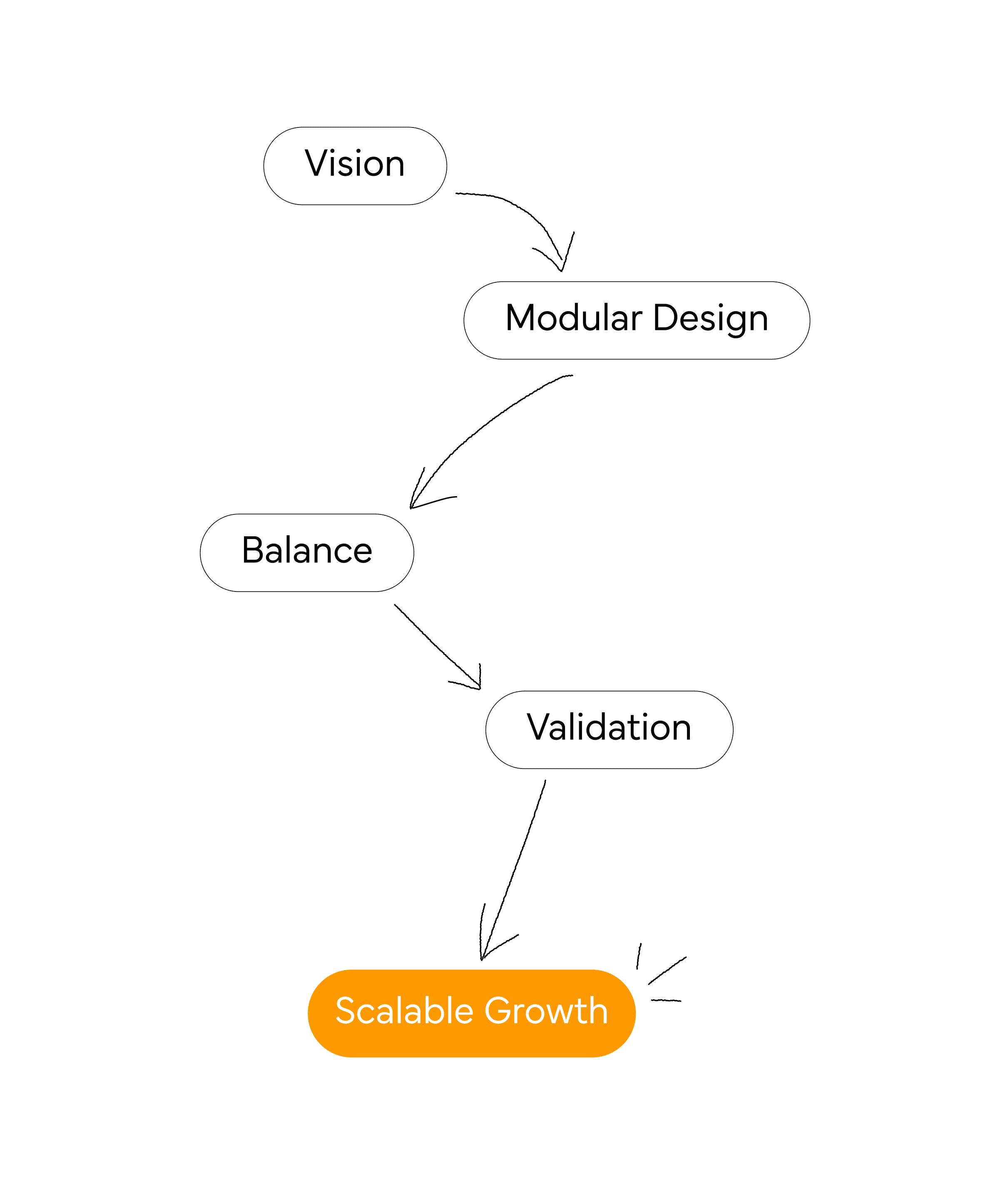
Driving Scalability
➔ Use product thinking to support
long-term growth.
Work in progress…
Styleguide, components, user flow, low-fidelity wireframes
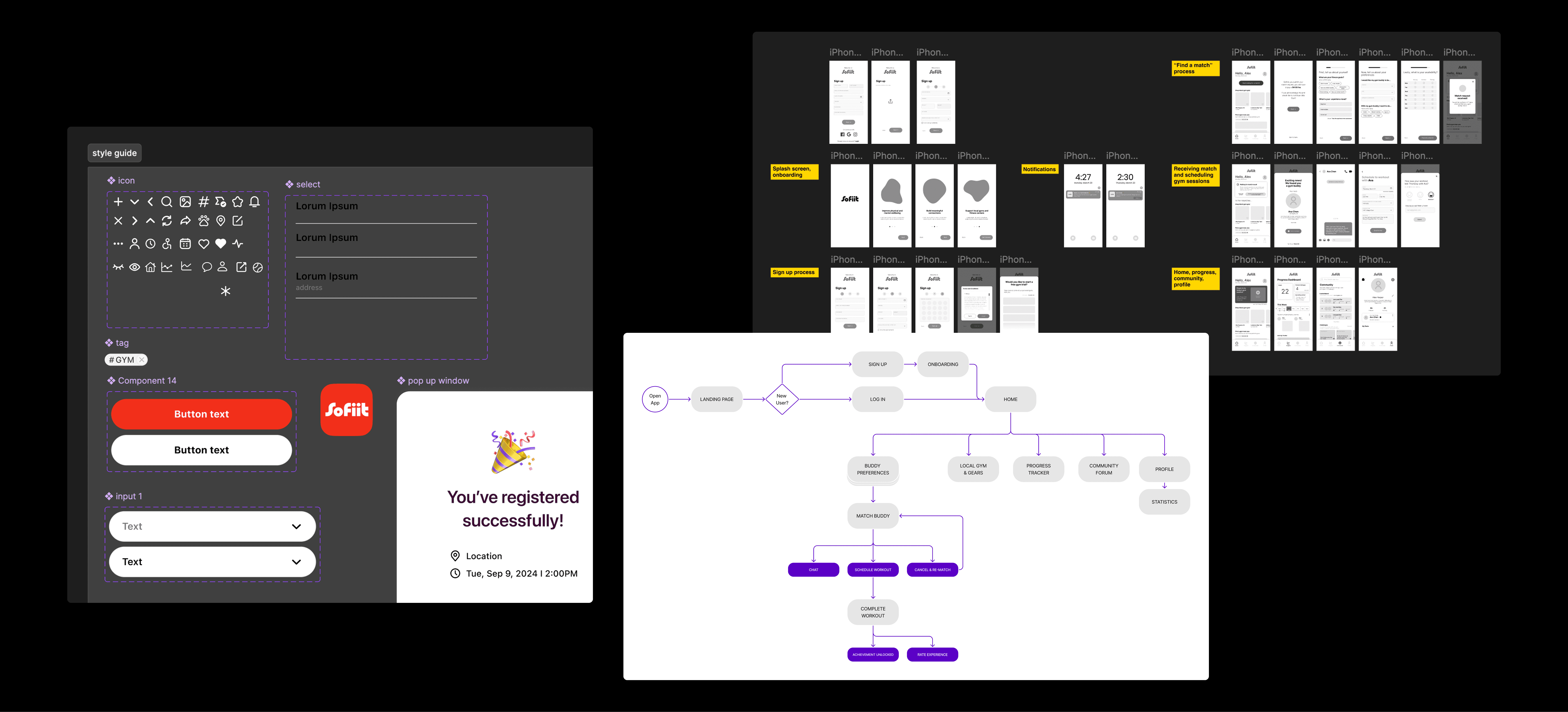
Final Product
A Community-First Wellness Platform
The final SoFiit experience brings community, accountability, and progress into a single platform—supporting students across fitness levels, from those just getting started to those with established routines.
Impact & Learnings
Impact Beyond the Product
Funded by USC Viterbi, SoFiit solved a critical data gap in student wellness research.
Traditional health surveys suffered from a low 9–11% response rate, leaving the administration with significant blind spots.
We addressed this by embedding lightweight micro-surveys directly into the app experience. This low-friction approach captured sentiment data and provided the university with higher fidelity, real-time insights.

According to survey

(<1% acceptance rate)
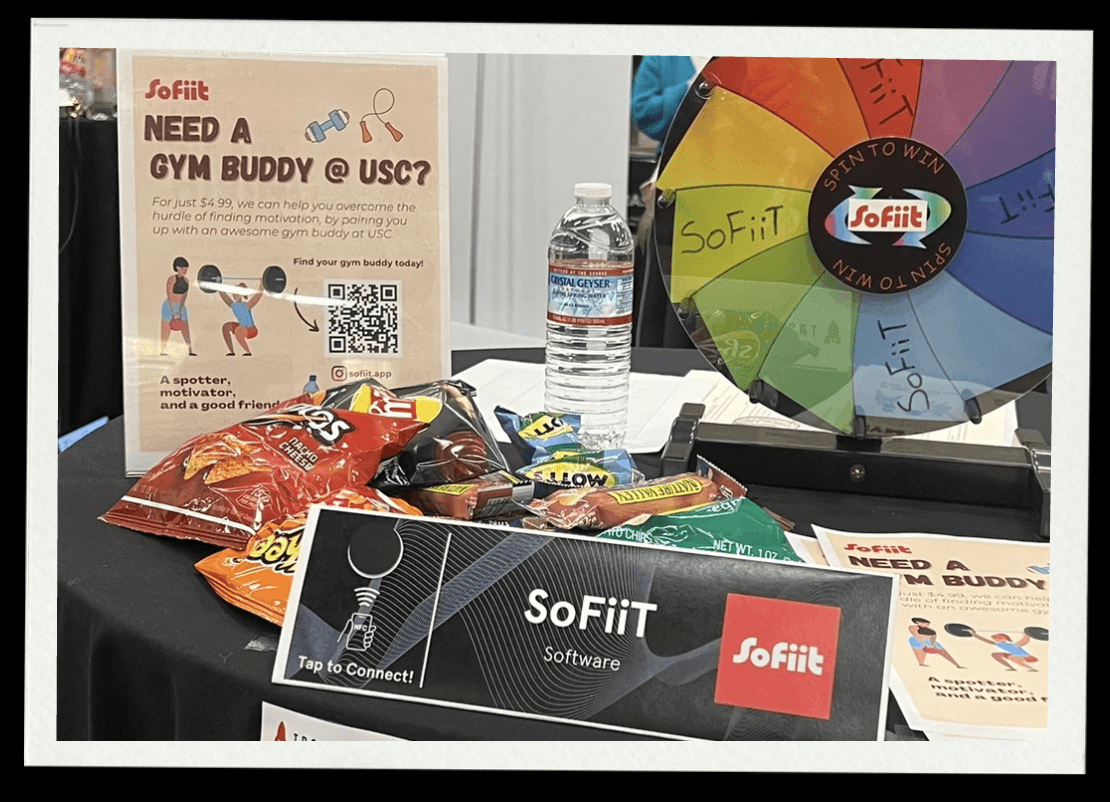
Community continues to grow
My Learnings
1. From Vision into Action
SoFiit began as a vague concept. Leading the 0 → 1 design process taught me to move fast, ship early, and translate high-level business goals into tangible, user-facing systems.
Design is a Team Sport
SoFiit began as a vague concept. Leading the 0 → 1 design process taught me to move fast, ship early, and translate high-level business goals into tangible, user-facing systems.